

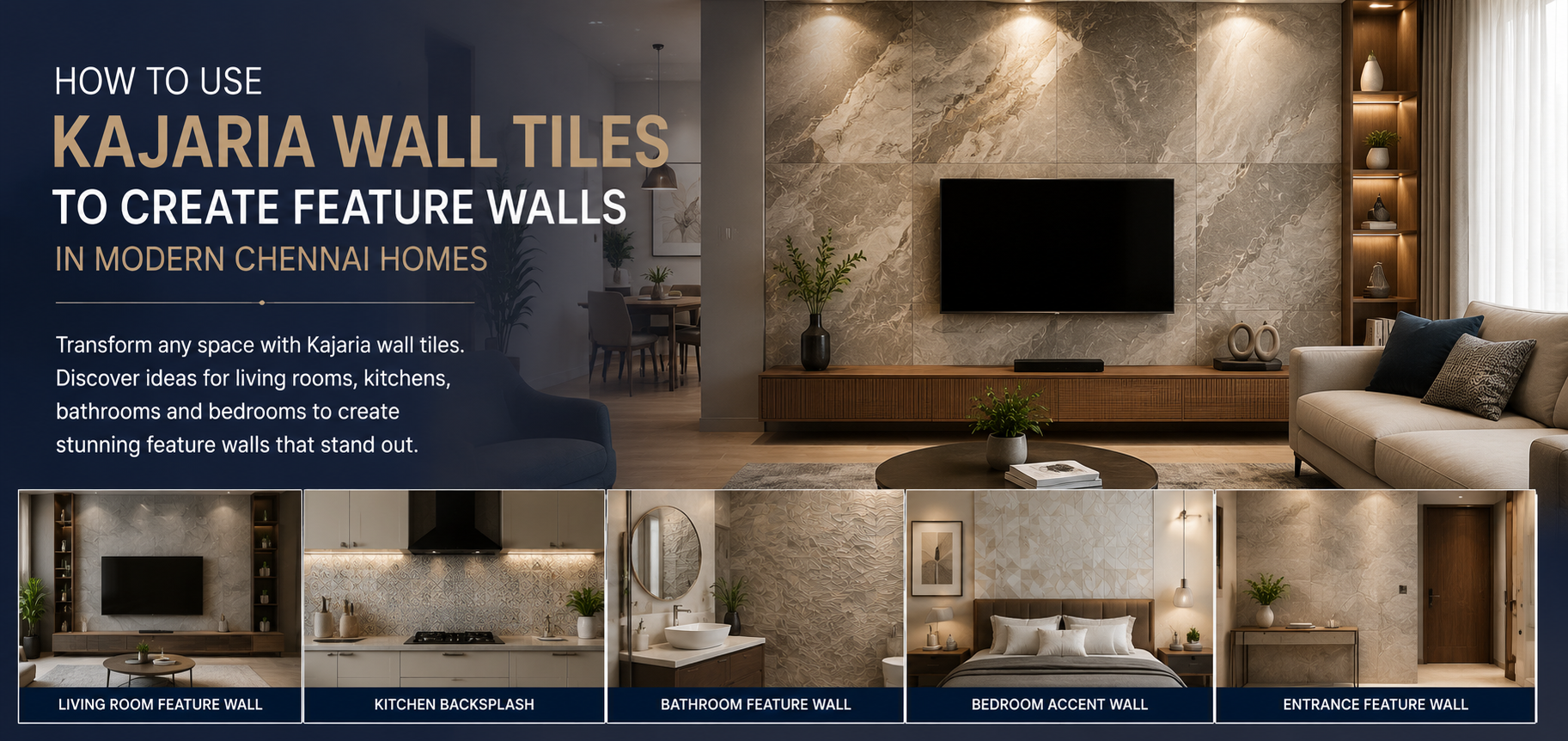
A feature wall can completely change the character of an interior without requiring a major renovation. Instead of covering every wall with an elaborate design, homeowners can use carefully selected wall tiles on one specific area to create a visual focal point.
For modern homes in Chennai, Kajaria wall tiles provide a wide range of possibilities, from subtle textures and stone-inspired surfaces to decorative patterns and contemporary designs. The key is to use them thoughtfully so that the feature wall complements the rest of the interior rather than making the space feel visually crowded.
Whether you are designing a living room, kitchen, bathroom, bedroom or entrance area, understanding where and how to use a feature wall can help create a more coordinated interior.
A feature wall is a selected wall that receives greater visual attention than the surrounding walls.
Instead of using the same tile or finish across every wall, one area can be given a different colour, texture, pattern or tile format.
A feature wall can:
The feature does not necessarily have to be bold. Even a subtle change in texture or tone can distinguish one wall from the rest.
The location of the feature wall is just as important as the tile itself.
Look for a wall that naturally attracts attention or contains an important architectural or functional element.
Suitable locations can include:
Avoid randomly selecting a wall simply because it is available. The feature should have a purpose within the overall interior design.
The living room is one of the most suitable areas for introducing a statement wall because it is usually a highly visible part of the home.
A feature wall can be created behind:
Stone-inspired wall tiles can provide a natural appearance, while marble-inspired designs can create a more refined look. Textured or geometric tiles can also be used when the objective is to add visual depth.
The surrounding walls can remain relatively simple so that the feature wall remains the primary visual element.
Homeowners can explore the Kajaria Wall Tiles Showroom in Chennai at SSK Agencies to compare different wall-tile designs, textures and formats for living-room applications.
The kitchen backsplash is another practical location for using feature tiles.
Because the backsplash occupies a relatively limited area, homeowners can introduce a more distinctive design without covering the entire kitchen.
Consider coordinating the backsplash with:
For example, a kitchen with simple neutral cabinets may accommodate a patterned or textured backsplash, while a kitchen with strongly coloured cabinets may work better with understated wall tiles.
The objective is to create a visual connection between the backsplash and the rest of the kitchen.
Bathrooms can benefit significantly from feature walls because tile is already a major part of the space.
Instead of using one design across the entire bathroom, consider highlighting a specific area such as:
A decorative or textured wall can create a focal point while the remaining surfaces use simpler tiles.
In a compact bathroom, a feature wall can also provide personality without introducing too many different patterns throughout the room.
Feature walls are not limited to common areas.
A bedroom wall behind the headboard can be an effective location for a subtle tiled accent.
For bedrooms, consider:
The design should support the calm character normally associated with a bedroom rather than becoming visually overwhelming.
Large-format wall tiles can create a more continuous appearance because there are fewer visible grout joints.
They can be particularly effective on:
However, large-format tiles require careful planning and installation. Wall condition, tile weight, handling, cutting and installation expertise should be considered before selecting a large format.
The size should also be appropriate for the wall itself. A very large tile may not always be the most practical choice for a narrow or highly segmented surface.
One effective way to create a balanced feature wall is to combine a statement tile with simpler surrounding surfaces.
For example:
Patterned feature wall + plain surrounding walls
This allows the design to stand out without making the entire room visually busy.
Another approach is:
Textured feature tile + subtle floor tile
This creates contrast while maintaining overall coordination.
The important principle is to establish one primary visual focus instead of giving every surface equal attention.
The feature wall should complement the flooring.
This does not mean the floor and wall need to use the same tile. In fact, using different but complementary designs can create a more interesting interior.
For example:
If you are selecting flooring for the same project, you can also explore the Kajaria Floor Tiles Showroom in Chennai at SSK Agencies to compare flooring options that can complement your chosen wall design.
Colour has a strong influence on how a feature wall is perceived.
Lighter colours can maintain an airy appearance, while darker colours can create depth and contrast.
Before selecting a colour, consider:
A dark feature wall can look impressive in a well-lit spacious room but may make a small, poorly lit room feel more enclosed.
Similarly, very light tiles may need contrasting furniture or accessories to prevent the space from appearing too uniform.
Lighting can change the appearance of wall tiles throughout the day.
Natural daylight can highlight texture and colour variations, while warm artificial lighting may make certain surfaces appear richer or warmer.
Before finalising a feature wall, consider how it will look:
This is especially important for textured, glossy or reflective tiles.
A feature wall does not always need to cover the entire wall from floor to ceiling.
Depending on the design, you can use tiles across:
The right coverage depends on the room and the architectural feature being highlighted.
For example, a TV-wall design may use tiles only within the media unit area, while a bathroom feature wall may extend across the complete shower zone.
Compact apartments require particularly careful use of feature tiles.
A small room can become visually crowded if several walls have strong patterns.
For compact spaces, consider:
A well-planned accent wall can add character without making the room feel smaller.
Larger homes provide more opportunities to experiment with decorative wall surfaces.
A villa may use feature walls in multiple areas, but each should serve a different visual purpose.
For example:
Although different designs can be used in different areas, maintaining a consistent colour or material theme can help the overall home feel connected.
One of the most common mistakes is using decorative tiles everywhere.
If every wall has a strong pattern, there is no clear focal point.
Instead, allow some surfaces to remain simple.
A good feature-wall design generally creates a relationship between:
Statement surface + supporting surfaces + furniture + lighting
The supporting elements should enhance the feature rather than compete with it.
A tile should complement the size, lighting and purpose of the space.
Multiple strong patterns can make an interior look cluttered.
The feature wall and flooring should work together visually.
A large sofa, TV unit or cabinet may cover much of the wall. Consider the finished layout before selecting the tile.
A tile can look different when repeated across a large wall. Whenever possible, visualise the complete installation.
Texture and colour can change significantly under different lighting conditions.
Choosing wall tiles is easier when you can see the actual designs rather than relying only on online photographs.
A showroom visit allows homeowners to compare:
Seeing several options together can also make it easier to decide whether a tile should be used as a feature or as a supporting surface.
If you are planning a new home or renovation, visit the Kajaria Wall Tiles Showroom in Chennai at SSK Agencies to explore wall-tile options for living rooms, kitchens, bathrooms, bedrooms and other spaces.
You can also explore the SSK Agencies tile showroom for a wider range of tile and surface solutions for residential and commercial projects.
A well-planned feature wall can add character to a modern Chennai home without overwhelming the overall interior. The key is to select the right wall, choose a design that suits the space and coordinate it with the flooring, furniture, lighting and surrounding surfaces.
Kajaria wall tiles provide plenty of possibilities for creating subtle or distinctive feature walls. Whether you are designing a compact apartment, independent house or spacious villa, thoughtful planning can help you achieve a balanced result.
For homeowners looking for wall-tile solutions in Chennai, SSK Agencies offers a wide range of Kajaria wall tiles that can help bring different interior design ideas to life.

Copyright © Sri Sai Krishna Agencies | Designed by Glint Creatives

